


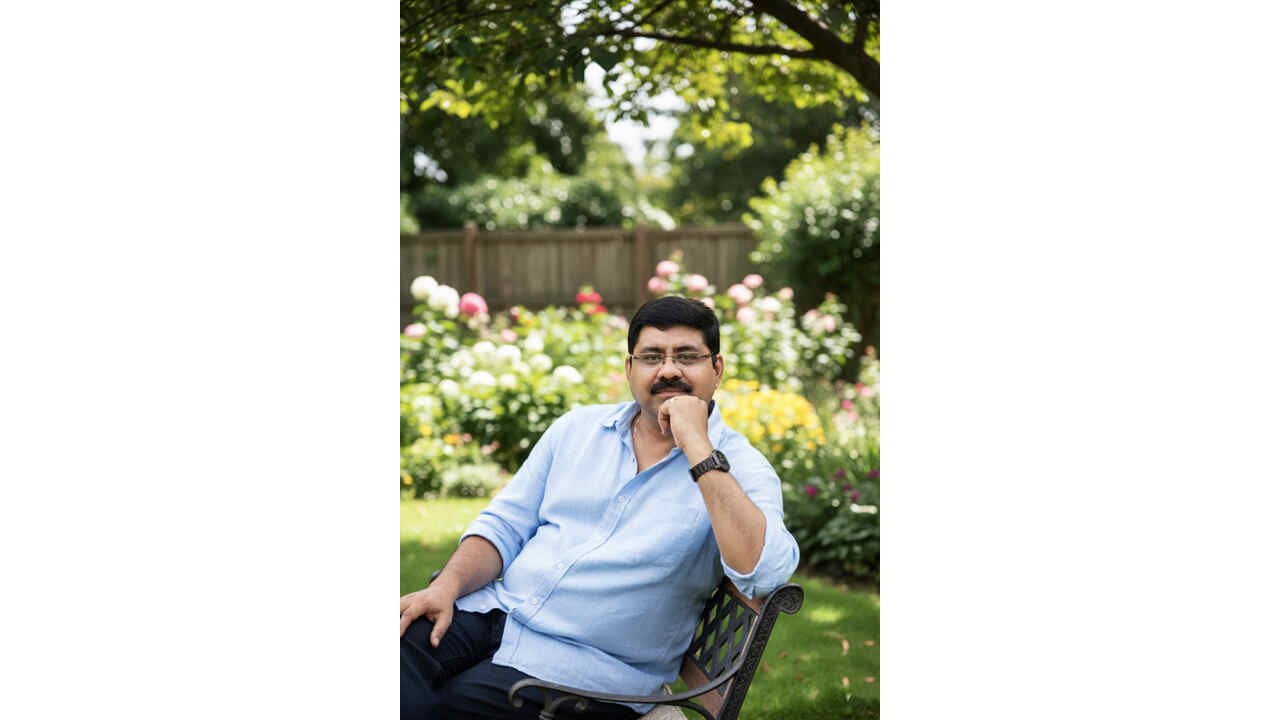
What begins as the pain of a love ending slowly transforms into a quiet inner search. After a passionate relationship falls apart, a woman finds herself pulled back by vivid memories, familiar scents, and sudden moments where the man she loved feels close again.
These experiences are not merely signs of heartbreak but clues created by her own mind. As she follows them inward, she begins to question her understanding of love and confront truths she had long avoided.
Part romance and part psychological mystery, Soliloquies: Echoes of the Mind is a story of introspection, emotional awakening, and the hidden truths that emerge when we dare to look within.
1. What draws you to the medium of poetry, and how does it offer a distinctive way to communicate emotions and ideas?
To me, poetry is the most honest and simple way to express feelings and ideas. While prose may attempt to persuade or teach, poetry captures brief moments and subtle shifts in emotion and thought. It creates space for humility and reflection, allowing me to face complex ideas without trying to impress.
Writing poetry feels like speaking my thoughts aloud in verse, revealing both turmoil and peace. Through poetry, I try to capture those fleeting moments of understanding that provoke both reflection and a quiet smile, as seen in poems like “Echoes of Truth: Karna and Krishna” and “Dreams in Solitude.”
2. What inspired the themes of your poems, and how did this influence their tone and structure?
My poetry often emerges from introspection and an attempt to understand the contradictions of life and its occasional moments of clarity. I frequently write about the mind’s struggles, the search for peace amid chaos, and the acceptance of imperfection.
This inspiration shapes the tone of my poems, which tends to remain modest and contemplative rather than grand or declarative. The structure follows the rhythm of reflection as well. Some poems unfold as conversations, such as “The Dialogue of Existence,” while others take a narrative form, like “The Chieftain’s Farewell,” mirroring how thoughts naturally appear and fade.
3. Poetry invites personal interpretation. How do you balance conveying your message while leaving space for readers’ interpretations?
I think of poetry as an invitation rather than a command. My poems do not claim to hold absolute truths; instead, they present insights and emotions that encourage readers to reflect for themselves.
This openness allows readers to discover their own meanings within the poem. For example, “Fleeting Echoes” explores the temporary nature of life without dictating what should matter most. Instead, it allows readers to draw their own conclusions. I try to maintain this balance by being honest in my expression while leaving space for interpretation.
4. How do you craft the musicality of your language, and why is it important to the reader’s experience?
The sound of language plays an important role in poetry. I aim to create rhythm and flow so that the words mirror the emotions within the poem.
Soft sounds and gentle repetition can evoke calmness, while sharper sounds can convey tension or urgency. In poems like “Dreams in Solitude” and “Echoes of Truth: Karna and Krishna,” I use rhythm, rhyme, and alliteration to shape the mood.
For me, these elements are not merely decorative—they deepen the emotional experience. Poetry should not only be read but also heard, allowing its music to linger in the reader’s mind.
5. How has your personal journey influenced the themes and imagery in your poetry?
My poetry is deeply influenced by my personal reflections and experiences. Observations from life, learning about history and people, and insights gained through conversations all shape the themes and imagery in my work.
For instance, “Building a Nation” explores cultural identity and pride, while “The Burden of Knowledge” reflects on both the power and the responsibility that education brings. Each poem offers a personal perspective while inviting readers to join in that exploration.
6. How do you use poetry as a way to comment on the world around you?
For me, poetry is a gentle way of reflecting on the world rather than preaching about it. I try to highlight the contradictions and complexities of modern life.
In poems like “The Paradox of Modern Life” and “Religious Interfaith,” I explore tensions between progress and humanity, and between faith and division. My aim is not to provide answers but to encourage thoughtful reflection about the world we live in.
7. Do you follow any particular writing rituals or practices that help cultivate your creativity?
I try to stay open to learning and remain willing to revise my work. I do not follow strict routines; instead, inspiration often comes from what I observe, hear, or think about during quiet moments.
I usually jot down ideas as they come and revisit them later with fresh perspective. For example, “Dreams in Solitude” began during a calm early morning when a simple image came to mind. I initially wrote a few rough lines without worrying about structure.
Over the next few days, I revisited the poem and refined it carefully, asking whether each word truly conveyed the mood I intended. One stanza began as a simple image of silhouettes on a wall, but gradually evolved into an opening about longing.
Through revision, I simplified many lines to preserve honesty and clarity. I believe creativity grows when we remain curious and accept that learning never truly ends.
Dive into a poetic journey of memory, emotion, and self-discovery.
Soliloquies: Echoes of the Mind invites readers to explore the quiet spaces of the human heart where love, loss, and truth gently meet.
Discover the echoes within your own mind. Buy your copy today on Amazon.


