


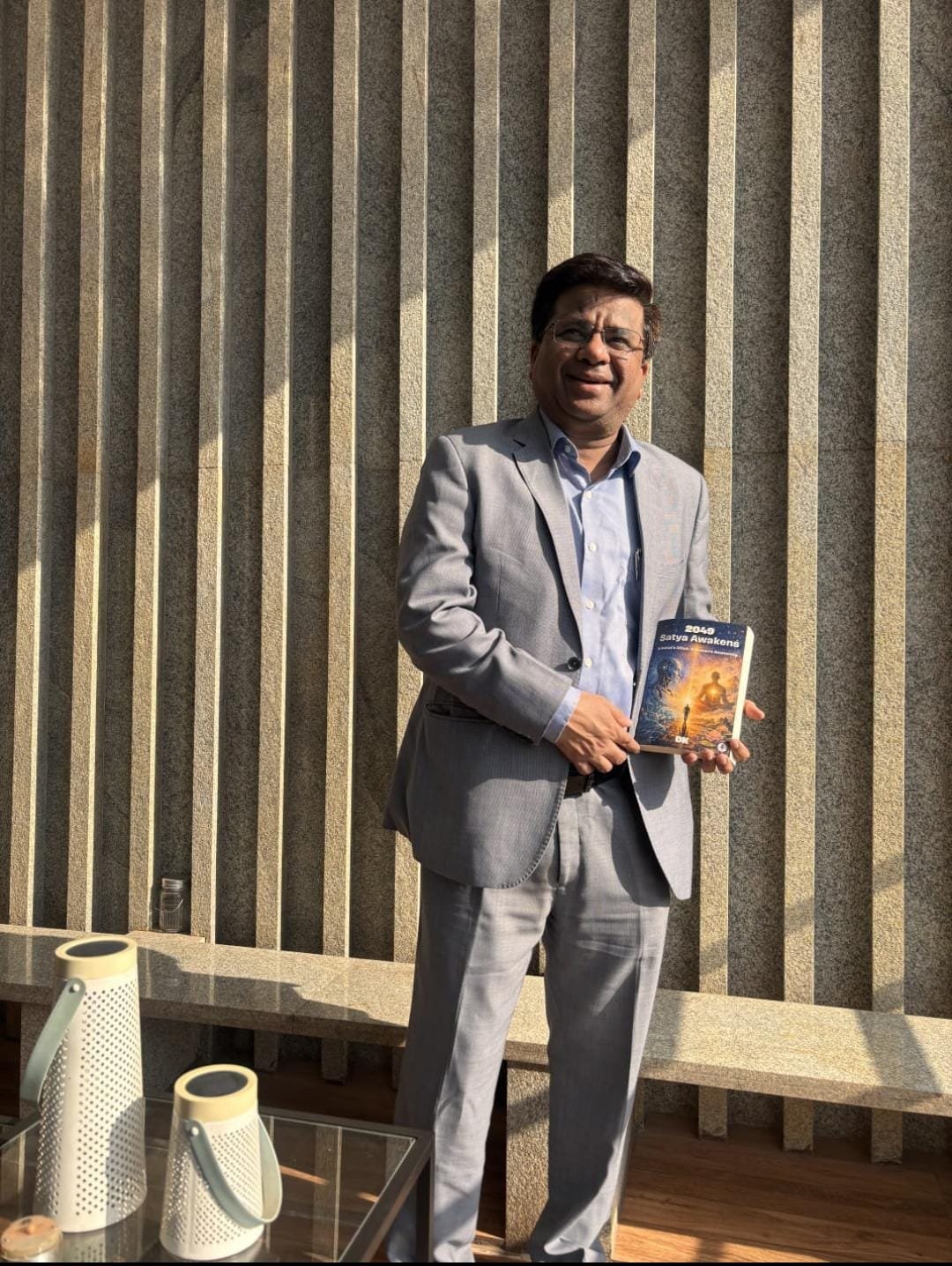
In a near-future world where systems have perfected efficiency and optimization, a subtle anomaly begins to surface — not in machines, but in the way decisions are made.
2049: Satya Awakens – A Robot’s Glitch explores the hidden mechanics of decision-making under pressure through the lens of a virtual AI character named Satya. Rather than offering answers or philosophical conclusions, the narrative quietly observes how individuals and systems behave when performance and awareness intersect.
Set in the year 2049, the story deliberately avoids predicting technological futures. Instead, it uses a minimal speculative backdrop to shift attention toward the deeper patterns behind action, choice, and consciousness.
The result is a reflective and thought-provoking narrative that invites readers to notice their own decision-making processes — without being told what to believe or change.
1. What inspired you to write this particular book, and how did the idea for the story come to you?
The book emerged from a personal observation rather than a traditional story idea.
While life appeared complete and well-structured on the surface, there was a persistent sense that something subtle was being missed in the way decisions were made under pressure.
The near-future AI narrative of Satya became a neutral framework to observe that condition without turning it into advice, philosophy, or spirituality.
2. Can you share some insights into your writing process?
Do you follow a specific routine or have any unique rituals that help you get into the creative flow?
There was no fixed routine.
I mostly wrote on weekends, while weekdays were spent observing real-life decisions and pressures as they unfolded.
I wrote only what I had directly observed, and stopped the moment the writing began to turn into explanation or advice.
3. The characters in your book are quite distinct and memorable. Are they based on real people, or did they evolve purely from your imagination?
The characters are not modeled on specific individuals.
Satya is entirely a virtual AI character — a narrative device rather than a person.
The other situations in the book are drawn from real-life contexts and experiences, but they are presented as patterns rather than personal stories — ways people and systems tend to behave under pressure, not portraits of anyone in particular.
4. Your book delves into decision-making and awareness under pressure. What motivated you to explore this theme, and what discussions do you hope readers take away?
The motivation came from noticing how often decisions are made efficiently but unconsciously, especially in high-performance environments.
Rather than offering messages or conclusions, the book leaves space for readers to observe their own decision-making patterns without being told what to think or change.
5. The world-building in your novel is immersive. How did you go about creating the setting, and did you draw inspiration from real-world locations or events?
The setting is intentionally minimal. The year 2049 is not meant to predict the future but to represent a point where optimization and efficiency have largely succeeded.
That backdrop allows attention to shift away from external problems and toward the internal mechanics of action, choice, and awareness.
6. As a writer, how do you balance originality with genre expectations? Were there challenges in putting a unique spin on familiar elements?
The main challenge was resisting genre expectations altogether.
The book borrows the form of speculative fiction but avoids the usual promises of plot resolution, moral arcs, or dramatic transformation.
In this case, originality comes more from omission than invention.
7. The pacing of the story keeps readers engaged. How did you approach maintaining tension and momentum?
The tension in the book does not come from events but from pauses. Momentum is created by withholding conclusions rather than escalating conflict. The story moves forward through observation rather than action.
8. In today’s rapidly changing media landscape, how do you see the role of traditional storytelling evolving, and how does your book connect with contemporary readers?
Traditional storytelling increasingly competes with speed, opinion, and instruction. This book moves in the opposite direction — slowing down narrative expectations rather than adapting to them.
Its relevance to contemporary readers lies in offering a rare space for reflection in a time when most content demands immediate reactions.
Ready to Experience a Different Kind of Sci-Fi?
If you’re looking for a story that challenges how we think about decisions, awareness, and the silent mechanics of human behavior, this book offers a uniquely reflective reading experience.
👉 Buy your copy on Amazon today and explore the quiet question at the heart of 2049.


